
The Sound of a Celebration: Adam Gibbs Reflects on Conducting the London Music Fund’s 15th Anniversary Celebration Piece
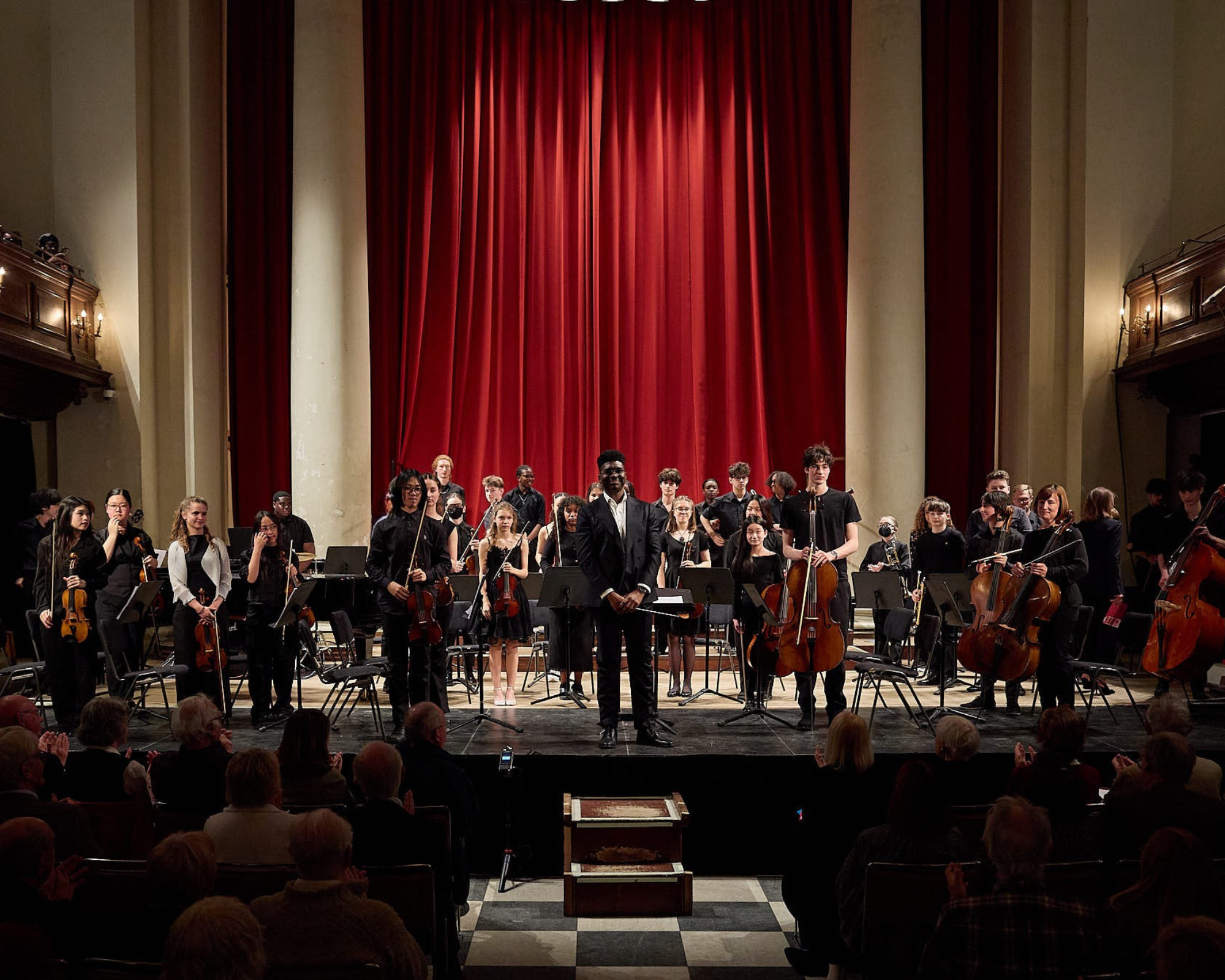
Adam Gibbs with the LMF Ensemble (Photo by Paul Cochrane)
At LMF's 15th Anniversary Concert at Smith Square Hall in April, conductor and educator Adam Gibbs led a specially commissioned work celebrating 15 years of the London Music Fund. Created during a day-long workshop in February, LMF Scholars worked alongside Adam and composer Chris Jacklin from the City of London School to develop a collaborative composition of their own.
Starting from a short theme by Haydn, the students explored a range of compositional techniques and drew on their improvisational skills to generate the musical ideas for the piece. Chris then shaped and developed these ideas into the three-movement work you will hear above.
Adam is a conductor and violist who studied at the Royal Conservatoire of Scotland (RCS) and the Royal Academy of Music (RAM). As an RCS Trust Scholar and recipient of the Hugh S. Robertson Prize for Conducting, he has gone on to conduct renowned ensembles including the BBC Scottish Symphony Orchestra, the Royal Scottish National Orchestra and the Orchestra of Scottish Opera. Alongside his conducting career, Adam is a passionate advocate for music education and currently serves as Head of Instrumental Music at the City of London School.
We spoke with Adam about his musical journey, his work with young musicians and his reflections on conducting the celebration piece finale at LMF’s 15th Anniversary concert.
Could you start by telling us a bit about your musical journey and how it led you to conducting and education?
"My musical journey began at Bromley Youth Music Trust (BYMT), where I sang in the junior choir. I later took up the violin and piano, had a brief go at the oboe, and eventually settled on the viola before joining the National Youth Orchestra.
From there, I went on to study at the Royal Academy of Music. Not long afterwards, I started working with Tower Hamlets Arts and Music Education Service (THAMES), and soon after found myself back at BYMT, where I worked as an instrumental tutor and ensemble leader. When I turned 30, I decided to return to study and train formally as a conductor.
Studying conducting gave me the opportunity to enrich both my teaching practice and my overall musicianship. I have always tried to seek out opportunities to learn and develop new skills, whether directly related to music or in areas that support a wider career in the arts. For example, I completed an accounting and management course to gain a stronger understanding of budgeting and organisational leadership.
I would advise LMF Scholars to take up every training and educational opportunity they can. You never know which experience will open a door, but each contributes to your growth and personal development.”
As Head of Instrumental Music at the City of London School, what does your role involve and how does it shape your approach to music-making?
"It's an incredibly varied role and no two days are quite the same. The school has a wonderfully warm environment and there's a huge diversity to the work.
One day I might be coaching music scholars and encouraging them to explore music beyond their own instrument. While many are classically focused, they often have broad musical interests, so I might ask them to research an artist such as Frank Ocean or think more widely about music and culture. Other days involve teaching academic music and musicianship lessons.
Alongside that, there are admissions meetings, bursary discussions, finance planning and making sure the performance side of the department is properly resourced. I manage our team of instrumental tutors, oversee chamber music, and work closely with colleagues at City of London School for Girls to create more performance opportunities for students across both schools.
There is also a significant amount of concert planning. Last year, for example, I organised our Fright Night concert, which involved everything from shaping the artistic vision to the practical logistics behind the event."
How would you describe your philosophy when it comes to leading ensembles and supporting young musicians?
“My philosophy is something I feel very clear about. It stems from an experience I had when I was around 27, working with Camerata, under BYMT. I can still vividly remember a Wednesday evening rehearsal about nine years ago. Everything about the process was joyous: the students loved being there, I loved being there, and they were genuinely excited by the repertoire. I realised how much more I could get out of the ensemble simply by staying positive throughout, and that's shaped how I work ever since.
I believe you can maintain exceptionally high standards and challenge musicians to achieve more, but through positivity and encouragement rather than criticism. It's about recognising what is working well, building confidence, and then focusing carefully on the details that need improvement. For me, great music-making comes from combining high standards with a positive rehearsal environment.”
Are there any teachers or mentors who stand out from your own musical education?
"A few people immediately come to mind. Jonathan Josephs, once Head of Strings at BYMT, had a huge influence on me. He taught me when I was a student there and, years later, went on to employ me. We built a fantastic professional relationship, and he's been a really positive role model throughout my career.
It's a reminder that you never know where a relationship with a teacher might lead. Becoming Head of Strings at Highgate School myself years later was particularly meaningful because of the influence Jonathan had on my own journey.
My viola teacher at the RAM, James (Jim) Sleigh, also had a significant impact on my development. He was my tutor at both the Academy and the National Youth Orchestra, and his guidance played a major role in my going to study at the RAM."
Which moments or projects stand out as particularly defining in your career so far?
“Two moments particularly stand out. One was organising the Fright Night Concert at City of London School, where the boys' reaction afterwards told me just how much they'd enjoyed it, and conducting the First Orchestra in ‘Night on a Bare Mountain’, which was great fun too.
The other came from access in music. City of London School has a comprehensive 110 percent bursary scheme, but it didn't originally include free instrumental music lessons. I worked closely with admissions, finance, and the bursary scheme to make that happen, and it's something I'm genuinely proud of."
How did your relationship with the London Music Fund begin?
"My relationship with the London Music Fund began when I addressed the incoming 2025 Scholars at their Awards Day at Smith Square Hall, although I had first encountered the organisation much earlier when I was working at THAMES in 2013. Even back then, I was aware of the important role LMF was playing in supporting young musicians across the capital.
More recently, I came to work with the London Music Fund through its partnership with City of London School. I've always believed that collaboration is one of the most powerful sources of enrichment. Bringing together people from different schools, organisations and communities broadens horizons, encourages new ways of thinking and creates opportunities that might not otherwise exist.
Watching LMF Scholars flourish over the years, and seeing how much the charity itself has grown, has been genuinely inspiring. At a time when arts funding is increasingly limited, it's a powerful reminder of what can be achieved when organisations come together around a shared purpose.”
What made you want to conduct the 15th Anniversary Celebration Piece?
"Through the partnership between City of London School and LMF, I was invited by Richard Quesnel, City Schools Director of Music, to conduct the piece. As the performance drew closer, it became increasingly clear just how ambitious the work was and how significant it would be in marking LMF's 15th anniversary.
The opportunity also resonated with my own journey as a musician and educator. Supporting young musicians has been a constant thread throughout my career, so being involved in a performance that showcased their talent and celebrated their achievements was particularly meaningful. There is something special about being asked to be part of a project like that, and it reminded me that some of the most rewarding experiences can often arrive unexpectedly.”
What are your reflections on the concert and your role in it?
"Conducting the LMF Scholars Ensemble in the concert finale was a real honour. The standard of musicianship was exceptional, and I was hugely impressed by the energy, commitment and enthusiasm they brought to every rehearsal as well as the performance itself. It was a wonderful way to celebrate everything LMF has achieved over the past 15 years."
How did you connect with the Celebration Piece and the Scholars who performed it?
"I wanted the performance to feel like a true celebration of the musicians themselves. The structure of the piece allowed for that, particularly through its improvised sections, which gave the Scholars the freedom to express their own musical identities. You could really hear their individuality in the performance, which made it incredibly special."
Was there a section of the piece that particularly stood out to you?
"If I had to choose a favourite moment, it would be the section where the string writing suddenly becomes much more animated. When I first looked at the score, I remember thinking it would be interesting to rehearse. The LMF Scholars completely rose to the challenge. The combination of disco-inspired rhythms and virtuosic string writing created an incredible energy, and for me it was one of the highlights of the entire piece."
How do you think the Celebration Piece reflected the spirit of LMF and our young musicians?
"As a Londoner, I felt the different movements of the piece captured something of the London microcosm: a deeper, more brooding quality at the start, giving way to a funky, playful sense of the city's vibrancy. It felt very London.
What struck me most during the February Playing Day, when the piece was co-commissioned, was the incredible range of musical backgrounds in the room. There were classical musicians, jazz players, pop enthusiasts, and Scholars rapping, all contributing their own ideas and influences.
Watching those different voices come together to create something that genuinely reflected who they are felt very in keeping with the spirit of LMF. It also resonated with my own musical interests outside of classical. I grew up listening to rap artists such as NSG and Nines, as well as plenty of rock music, so it was fantastic to see such a natural blend of influences represented in the piece."
What do you hope to see from LMF over the next 15 years?
"I hope LMF continues to go from strength to strength, supporting talented young musicians from London and beyond, and helping even more young people unlock their potential.
It is particularly exciting to see the new Intermediate Scholarship Programme launching this September, creating an additional year of support for graduating Junior Scholars and bridging the gap between the Junior and Senior Scholarship Programmes. I wish the entire LMF team every success for their 15th anniversary year."
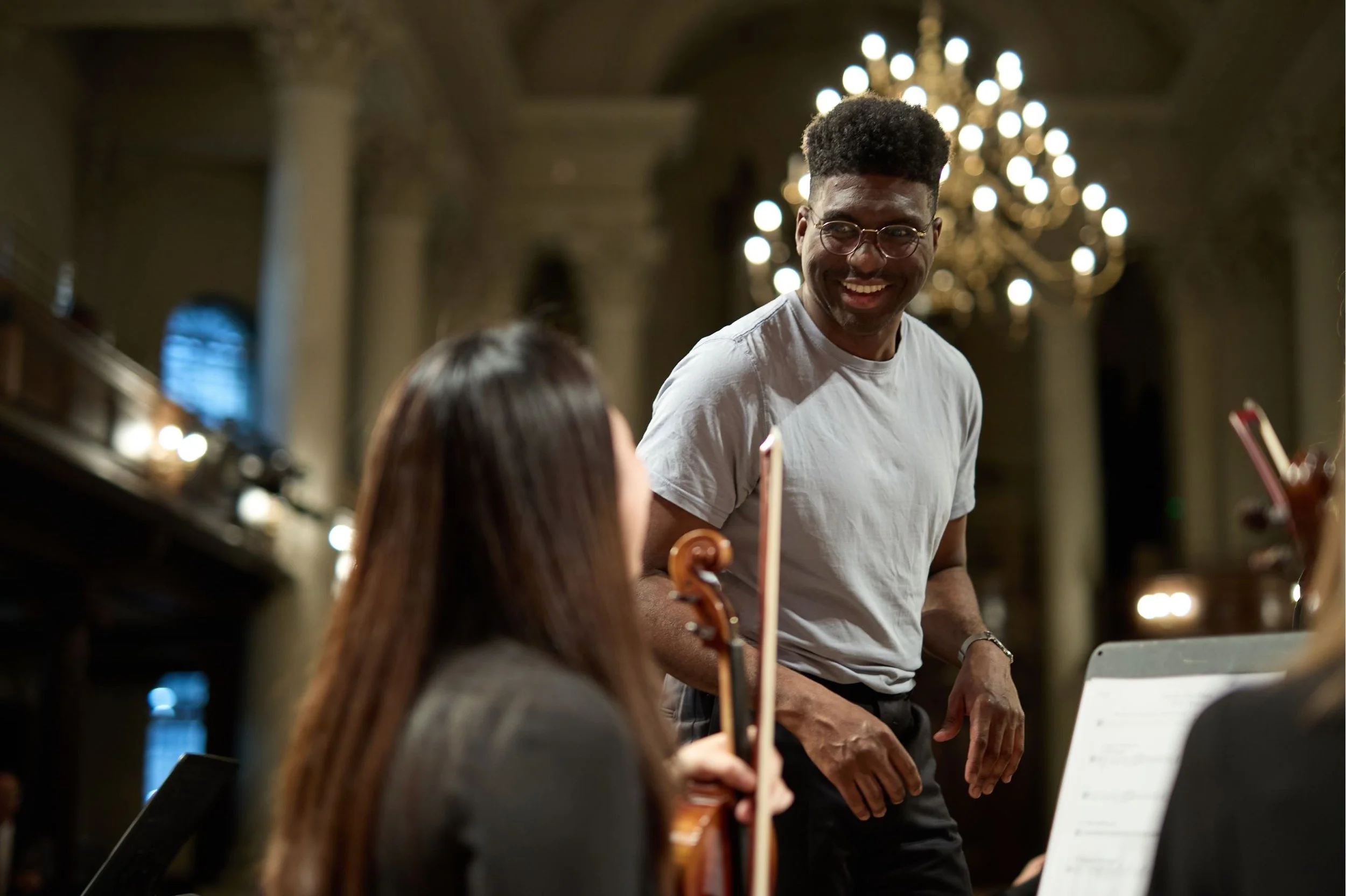
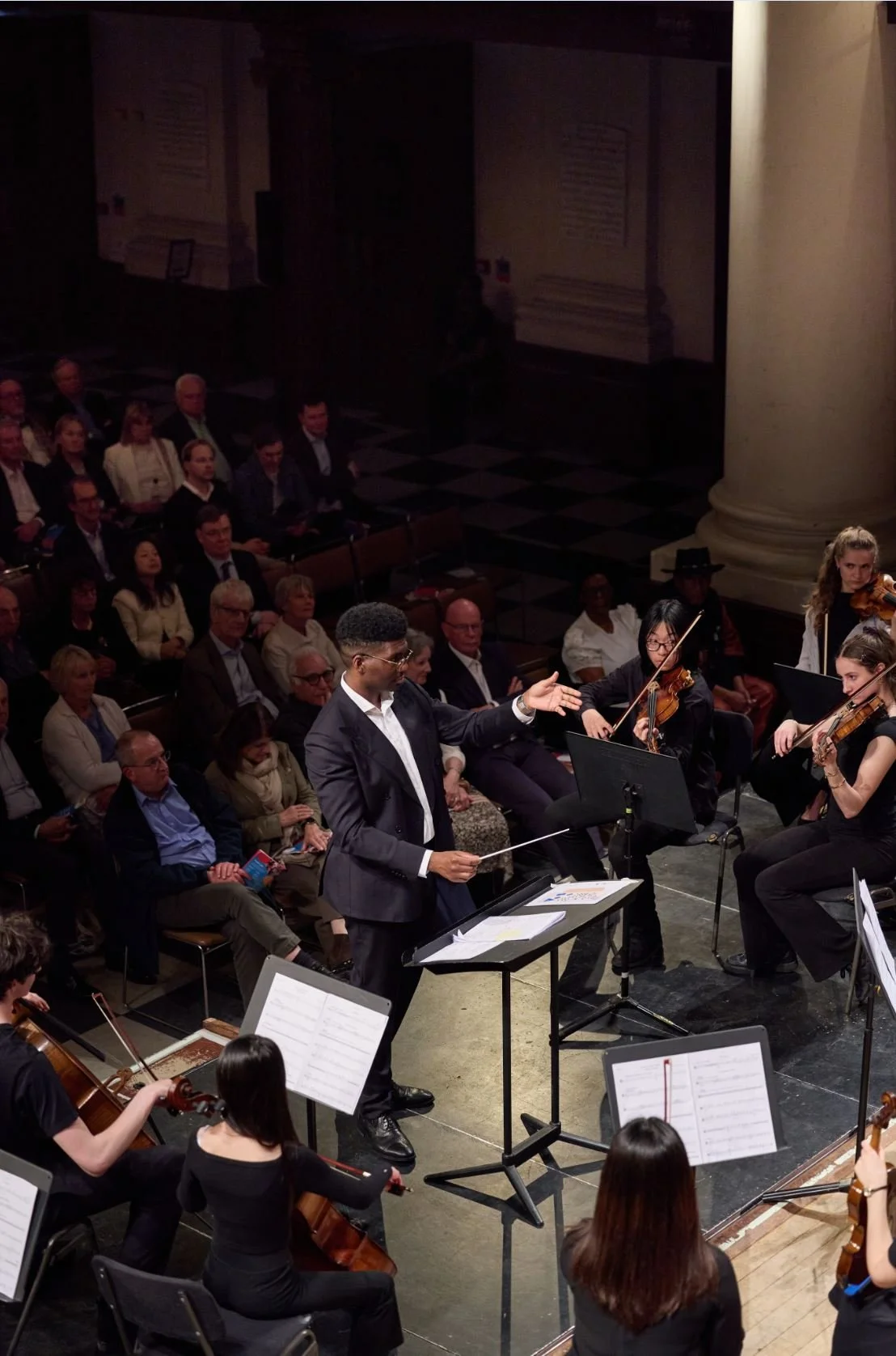
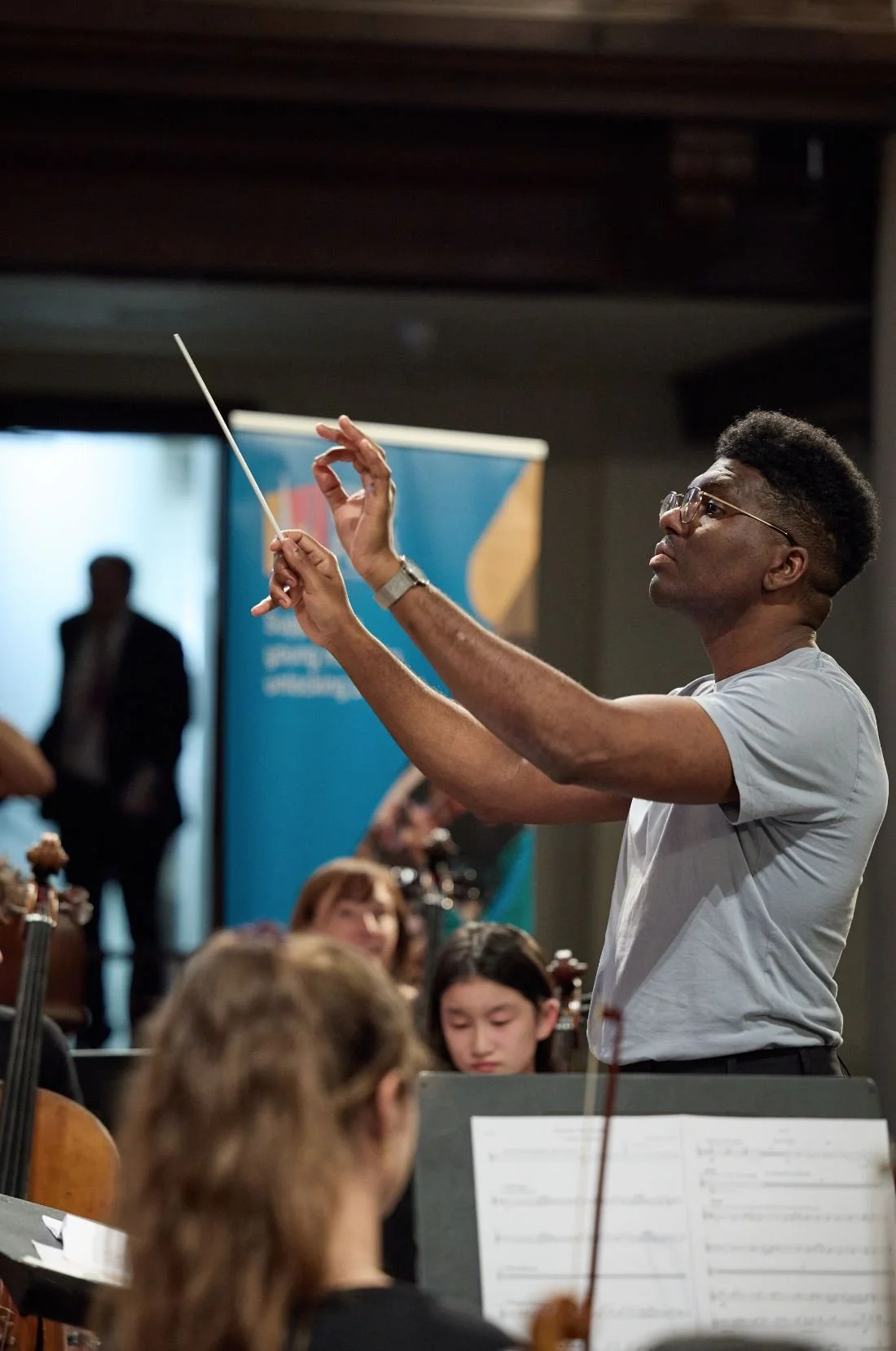
Photography: Paul Cochrane